Garage Door Tune-Up & Maintenance
Every emergency call we route — the 7 AM snapped spring, the frozen-down door, the cable that let go — was preventable for about the cost of a tank of gas. An annual tune-up is the highest-ROI money you can spend on this machine, and it’s the cheapest visit on this site.
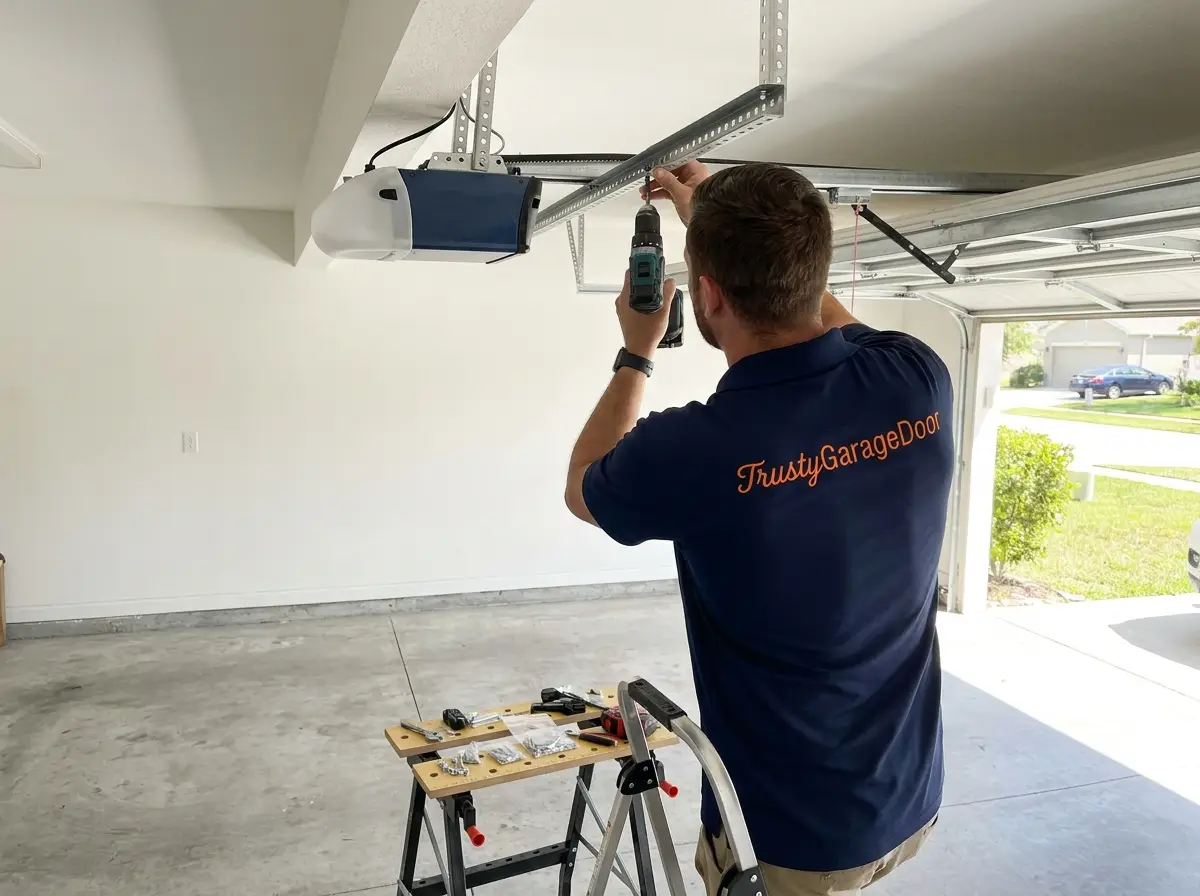
What a professional tune-up actually covers
A real tune-up is a 30–45 minute working inspection, not a squirt of spray and a handshake:
- Balance test and spring tension adjustment — the single biggest opener-saver; an unbalanced door silently destroys motors.
- Cable inspection under load, especially the bottom ends where rust and fraying start.
- Roller and hinge check — worn steel rollers and cracked hinges replaced before they exit the track.
- Track alignment and full hardware retorque — vibration backs bolts off, fastest in temperature-swing climates.
- Lubrication with the right product per component: springs, hinges, bearings, opener rail — never the track.
- Opener safety calibration: photo-eye alignment and the 2x4 contact-reversal test (federal law since 1993), plus force and travel settings.
- Weather seal condition — bottom and jamb seals that keep out water, pests, and (in freeze country) prevent the door freezing to the slab.
The math: $120 once a year vs. the alternative
Tune-ups pay for themselves in two ways. First, lifespan: lubricated, balanced hardware genuinely lasts about twice as long — springs run their full cycle rating instead of failing early from dry friction and rust, and openers driving balanced doors reach 15 years instead of 8. Second, timing: catching a fraying cable at a scheduled visit costs $150–$250 on your calendar; meeting the same cable as a snapped-at-7-AM emergency costs the same repair plus the after-hours premium plus the morning. Multiply across a 25-year door and the annual visit is the cheapest line item in the system.
When to schedule — by climate
Fall is the universal answer, with local reasoning. In freeze metros (Chicago, Naperville, Denver), a fall tune-up with cold-rated lubricant is what stands between your springs and the first-hard-freeze failure wave — plus the silicone-treated bottom seal that resists freeze-down. In Gulf-humidity metros (Houston, Atlanta, Charlotte), the priority is corrosion control on springs and cables, twice a year if the garage is unsealed. In the desert (Phoenix, Mesa), spring and fall: high-temperature lubricant before the oven season, and a post-monsoon cleaning of dust-packed tracks and sensors. Coastal Florida runs the most aggressive schedule of all — salt waits for no one.
Tune-up vs. the maintenance you can do yourself
The homeowner routine (our full DIY checklist is on the blog) covers watching, listening, lubricating, tightening accessible bolts, and testing safety reversal — about 20 minutes twice a year, and genuinely worthwhile. What it can’t touch is everything under tension: spring adjustment, balance correction, cable replacement, and bottom-bracket hardware are strictly professional territory. The honest division of labor: you do the 20-minute routine in spring, a pro does the full tune-up each fall, and the system runs decades.
Full multi-point inspection, balance adjustment, and lubrication. Parts quoted separately if anything needs replacing. See your city’s page for local price ranges.
Tune-Up — Common Questions
Is an annual tune-up really worth it, or is it a service-industry upsell?
It’s the rare service visit with provable math. Springs that run dry and rusty fail measurably early; doors out of balance kill openers years ahead of schedule; fraying cables become off-track emergencies. One $90–$150 visit a year addresses all three, and catching a single failing part on schedule instead of as an emergency pays for several years of tune-ups. The industry’s dirty secret runs the other way: emergency repairs are far more profitable than maintenance.
What’s the difference between your tune-up and me spraying WD-40 on everything?
Two big ones. First, WD-40 is a solvent, not a lubricant — it strips existing grease and leaves parts drier than before; garage door components need garage-door-rated or white-lithium product, applied per component and never on the track. Second, the valuable half of a tune-up isn’t lubrication at all: it’s the balance test and spring adjustment, cable inspection under load, and safety calibration — work that requires training and winding bars.
When in the year should I book it?
Fall, almost everywhere. Cold-climate doors go into winter balanced and lubricated with cold-rated grease — which prevents most January spring failures — and warm-climate doors get corrosion control after the humid summer. Desert metros benefit from a second spring visit before the heat, and coastal Florida from a more aggressive salt-control schedule. If you’ve never had one, the right time is now; the calendar matters less than the inspection.
My door works fine. What would a tune-up even find?
The things that fail next. "Works fine" doors routinely hide a 30%-out-of-balance spring set (the opener compensates until it burns out), cables fraying at the bottom ends, three loose track bolts, and a contact-reversal force set high enough to be a child-safety issue. None of these announce themselves — that’s the point of looking. The visits that find nothing are quick, and you buy a year of not wondering.
Do you offer maintenance plans for multiple doors or rental properties?
Yes — most companies in our network offer scheduled maintenance for landlords, property managers, and HOAs, and commercial planned-maintenance agreements (including NFPA 80 fire-door testing) for facilities. Per-door pricing drops with volume, and scheduled visits convert door failures from tenant emergencies into calendar items. Mention the property count when you call and we’ll match you with a company that runs PM routes in your area.
Tune-Up Where You Live
Local pricing, local conditions, and a vetted pro for your area:
- Tune-Up in Chicago, IL
- Tune-Up in Houston, TX
- Tune-Up in Phoenix, AZ
- Tune-Up in Dallas–Fort Worth, TX
- Tune-Up in Charlotte, NC
- Tune-Up in Denver, CO
- Tune-Up in Atlanta, GA
- Tune-Up in Mesa, AZ
- Tune-Up in Miami, FL
- Tune-Up in Aurora, CO
- Tune-Up in Plano, TX
- Tune-Up in Chandler, AZ
- Tune-Up in Gilbert, AZ
- Tune-Up in Frisco, TX
- Tune-Up in McKinney, TX
- Tune-Up in Fort Lauderdale, FL
- Tune-Up in Naperville, IL
- Tune-Up in Pearland, TX
- Tune-Up in Pompano Beach, FL
- Tune-Up in Sugar Land, TX
- Tune-Up in Alpharetta, GA
- Tune-Up in Huntersville, NC
- Tune-Up in Marietta, GA
- Tune-Up in Katy, TX
Ready to get it fixed?
One free call connects you with a vetted local garage door pro.