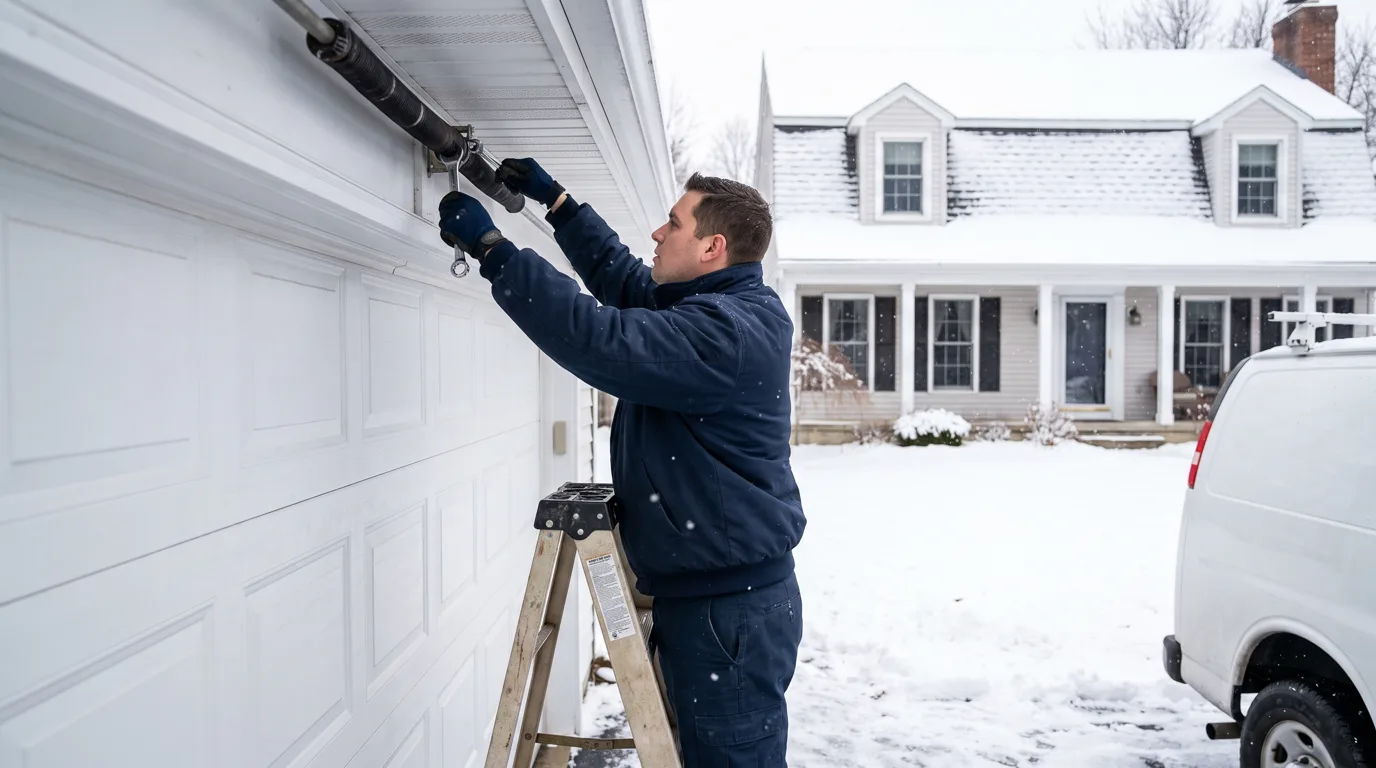
Garage Door Repair & Replacement in Chicago, IL
Same-day service from vetted, local Chicago garage door pros — springs, openers, off-track doors, and new installations, quoted upfront.
- Local Chicago pros, vetted & insured
- Price approved by you before any work
- 24/7 emergency response
Request Service — Free Quote
A vetted local pro in Chicago calls you back — usually within 15 minutes during business hours.
Chicago garage doors are winter equipment, and the city’s garage culture is unlike anywhere else in the country. Inside the city, the classic setup is a detached two-car garage on the alley behind a bungalow or two-flat — tens of thousands of them, many unheated, many with doors and hardware decades old. In the suburbs, attached two- and three-car garages dominate from Naperville to Arlington Heights. Both worlds answer to the same boss: a winter that snaps springs, freezes doors to slabs, and corrodes hardware with months of road-salt-laden slush dragged in on every car.
The first hard freeze of each Chicagoland winter is the busiest garage door morning of the year — dispatchers can predict it from the forecast. Spring steel grows brittle in the cold, and coils that survived all summer crack by the dozen when the temperature plunges overnight. Wet snow then freezes bottom seals to concrete slabs, and homeowners who hit the opener button against a frozen-down door strip trolleys and burn out motors before breakfast. Cold-thickened grease, contracting metal pulling tracks out of alignment, and dead remote batteries fill out the January call sheet.
The companies in our Chicago network are winter specialists by necessity: high-cycle springs rated for cold-climate fatigue, cold-rated lubricants, silicone-treated bottom seals and threshold systems that resist freeze-down, and the institutional knowledge that a fall tune-up prevents most of January’s emergencies. They also know the city’s alley-garage quirks — tight setbacks, older wood-frame structures, and the City of Chicago’s contractor licensing rules.
Garage Door Services in Chicago
Repair in Chicago
A garage door that won’t open, won’t close, or makes grinding noises is more than an inconvenience — it’s a se…
Learn more →Spring Replacement in Chicago
The spring does the real lifting — your opener just steers. When a spring snaps, the door becomes a 200-pound…
Learn more →Opener Repair in Chicago
When the remote clicks and nothing happens, the problem may be a $15 sensor alignment or a worn-out motor — an…
Learn more →Installation in Chicago
A new garage door is consistently ranked the single highest-ROI home improvement in Remodeling Magazine’s Cost…
Learn more →Commercial Repair in Chicago
A failed overhead door doesn’t just block a bay — it stops trucks, idles crews, and leaves inventory exposed.…
Learn more →24/7 Emergency in Chicago
A garage door stuck wide open at 11 PM is an open door to your home. A car trapped behind a dead door at 6 AM…
Learn more →Every Chicago Pro Is Vetted Before They Reach Your Door
Insurance Verified
Active general liability coverage confirmed before joining our network — and rechecked periodically.
Licensed Where Required
State and city contractor licensing verified wherever the jurisdiction requires it.
Upfront Pricing Required
Every pro quotes the price on-site, in writing, before work begins. Bait-and-switch ends the partnership.
Track Record Reviewed
Years in business, review history, and complaint patterns checked under one consistent company name.
Garage Door Service Costs in Chicago
Typical all-in price ranges (parts + labor) reported in the Chicago area. Your exact quote depends on door size, parts, and access — the technician confirms the price before any work begins.
| Service | Typical Chicago Range | Notes |
|---|---|---|
| Garage Door Repair | $160 – $475 | Most single-component repairs; winter surge pricing is a red flag — our network holds rates |
| Garage Door Spring Replacement | $190 – $425 | Both springs on a double door; cold-rated high-cycle springs recommended |
| Garage Door Opener Repair | $110 – $675 | Frozen-door trolley/gear damage is a classic January repair |
| Garage Door Installation | $1,300 – $4,800 | Insulated doors are the default choice here; alley access can affect labor |
| Commercial Garage Door Repair | $300 – $1,500 | Major industrial market; NFPA 80 fire-door testing available |
| 24 Hour Emergency Garage Door Repair | $225 – $700 | After-hours premium typically $100–150; first-freeze mornings book out fast |
Want an exact number for your door?
Free quote over the phone in minutes — confirmed on-site before any work.
Garage Door Replacement & New Installation in Chicago
When a door is past saving — rusted-through sections, repeated spring and cable failures, or panels that no longer exist as replacement parts — our Chicago pros measure, quote, and install new doors, usually within one to two weeks. A new garage door installed in Chicago typically runs $1,300–$4,800 depending on size, material, and insulation. The install price is quoted in writing before any work is scheduled, and the old door is hauled away as part of the job.
Not sure whether to fix or replace? Our guide to repair vs. replacement walks through the five factors that decide it, and the installation service page covers door styles, materials, and what's included in every install.
What Chicago Weather Does to Garage Doors
Continental extremes with a lake on top: subzero Arctic blasts and weeks below freezing in winter, hot humid summers, and lake-effect moisture that keeps corrosion active despite the cold. Road salt season adds months of corrosive slush dripping off cars onto garage floors and lower door hardware. The first hard freeze each year reliably triggers a metro-wide wave of spring failures and frozen-door calls.
Cold is the dominant spring killer: steel’s fracture toughness drops with temperature, so aging coils that would limp through fall crack on the first subzero morning. High-cycle springs and a fall lubrication with cold-rated grease are the proven countermeasures. Salt-laden slush also corrodes bottom brackets, cables, and lower track hardware faster than the climate alone would suggest.
Chicago Homes & Garages
Two distinct markets: inside the city, detached alley garages behind brick bungalows, two-flats, and worker cottages — many built mid-century, often with older doors, tight alley access, and unheated interiors. The suburban collar (Naperville, Schaumburg, Arlington Heights) runs standard attached two- and three-car garages from the 1970s onward. Chicago’s bungalow-belt garages frequently still carry legacy hardware and undersized openings that need a tech who has seen them before.
Permits & Local Rules
The City of Chicago requires contractors working in the city to hold a City of Chicago general contractor license — ask for it on any installation inside city limits. Suburban requirements vary by village: many (including Naperville and Arlington Heights) require contractor registration and a permit for full door replacement, while like-for-like repairs are generally exempt everywhere. Detached alley garages in the city are separate accessory structures, and structural changes to them can trigger their own permit path.
Chicago Neighborhoods We Serve
- Portage Park
- Jefferson Park
- Norwood Park
- Beverly
- Mount Greenwood
- Garfield Ridge
- Dunning
- Edison Park
- Sauganash
- Albany Park
- Clearing
Surrounding Communities
- Naperville
- Schaumburg
- Arlington Heights
- Evanston
- Skokie
- Oak Lawn
- Cicero
Serving Cook and DuPage Counties and surrounding areas.
Garage Door Questions from Chicago Homeowners
My garage door is frozen to the ground. Can I just keep pressing the opener?
No — that’s how Chicago strips opener trolleys and burns out motors every January. The opener will lose the fight against ice and break itself trying. Instead: disconnect the opener (pull the red release cord), gently break the ice seal along the bottom edge (warm water works in a pinch — then squeegee it away before it refreezes), and clear the slab. A silicone-treated bottom seal or a threshold strip largely prevents freeze-down going forward.
Why do springs always break during the first cold snap?
Steel grows brittle as temperature drops — its resistance to crack propagation falls measurably below freezing, so a fatigued coil that survived hundreds of fall cycles fails on the first subzero morning, often with a bang. It is the busiest garage door morning of the year in Chicagoland. The countermeasures: high-cycle springs (they carry far more fatigue margin), fall lubrication with cold-rated grease, and replacing the second spring when the first goes.
My garage is on the alley behind my bungalow. Do you handle detached city garages?
Yes — alley garages are half the Chicago market. The companies in our network work the bungalow belt daily and know its quirks: tight alley clearances, mid-century wood-frame structures that have settled, undersized or non-standard openings, and unheated interiors where cold-rated hardware matters most. If the garage structure itself has shifted enough to rack the opening, a good tech will tell you honestly before selling you a door that won’t sit square.
Does road salt really damage garage doors?
Meaningfully, yes. Every winter your cars drag in salt-laden slush that drips onto the slab and wicks onto the door’s lowest hardware — bottom brackets, bottom roller fixtures, cable ends, and the lower track. Those are exactly the components under the highest tension, and salt corrosion shortens their lives. An annual rinse of the lower door and track in spring, plus lubrication, is cheap; replacing corroded bottom brackets under tension is not a DIY job.
Is a contractor license required for garage door work in Chicago?
Inside city limits, yes — the City of Chicago requires a general contractor license for contracting work, and legitimate companies working the city carry it. In the suburbs, requirements vary by village; many require contractor registration plus a permit for full replacements. Wherever you are, verified liability insurance is the baseline. The companies in our Chicago network are licensed for the jurisdictions they serve — and you should always feel free to ask.
Helpful Reading for Chicago Homeowners
Garage door trouble in Chicago?
One free call. A vetted local pro. Usually fixed the same day.
Garage Door Service Near Chicago
We also connect homeowners with local pros in these nearby areas:
Page last updated: 2026-06-12