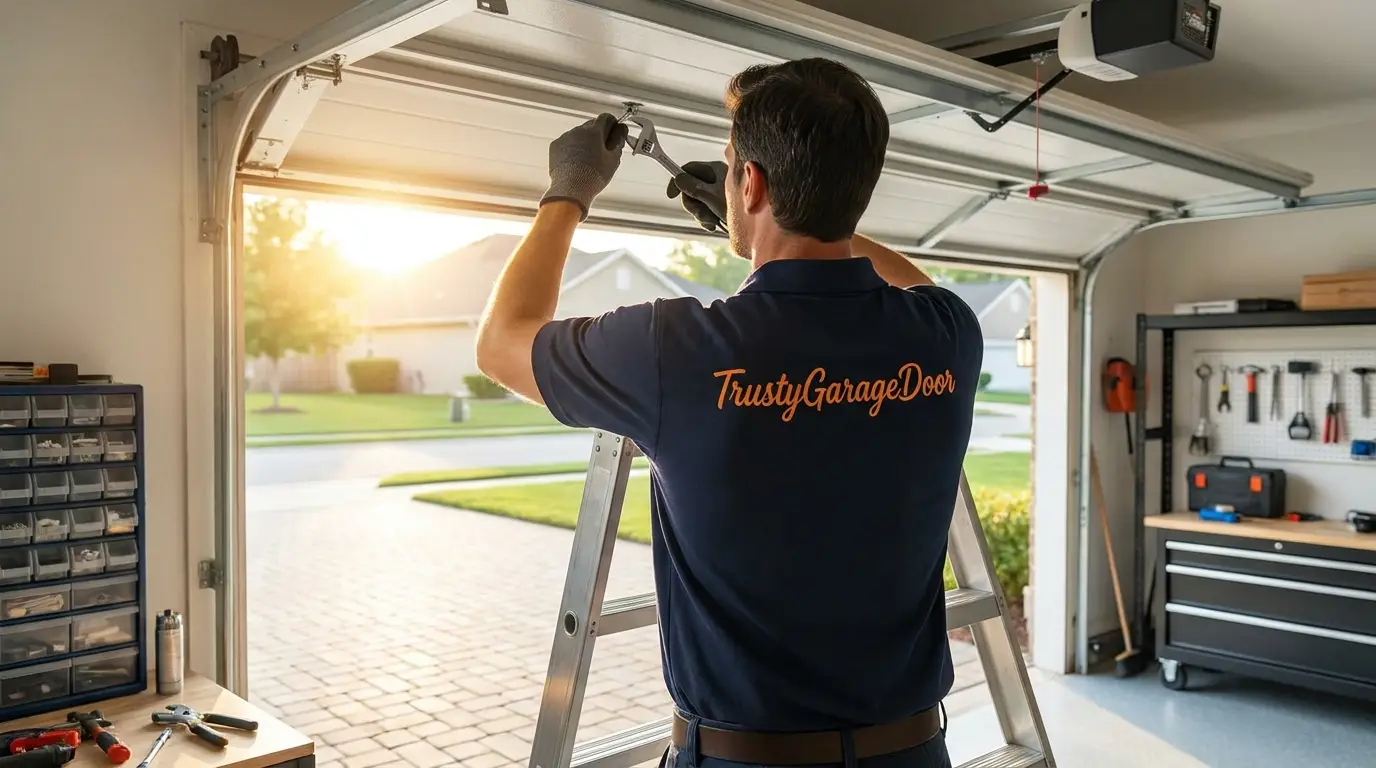
Garage Door Repair & Replacement in Charlotte, NC
Same-day service from vetted, local Charlotte garage door pros — springs, openers, off-track doors, and new installations, quoted upfront.
- Local Charlotte pros, vetted & insured
- Price approved by you before any work
- 24/7 emergency response
Request Service — Free Quote
A vetted local pro in Charlotte calls you back — usually within 15 minutes during business hours.
Charlotte’s garage door story is a growth story. The metro has been one of America’s fastest-growing for two decades, and that growth built garages by the hundred thousand — wave after wave of subdivisions across Ballantyne, Steele Creek, University City, and the ring towns of Huntersville, Matthews, and Indian Trail. Nearly all of it got the same treatment: builder-grade steel doors with 10,000-cycle springs, installed by the production builder’s subcontractor in bulk. The result is the most cohort-driven repair market in the Southeast — when a 2008 Ballantyne subdivision starts snapping springs, the whole street follows within a couple of seasons, and local techs stock spring sizes by subdivision era.
The climate gives doors a varied workout without one dominant enemy. Humid subtropical summers keep rust pressure on uncoated springs and cables — coated hardware visibly outlasts bare steel here. Winters are short but real: a few hard freezes each January reliably produce the classic cold-snap wave of spring failures on aging coils. And while Charlotte sits 200 miles inland, hurricane remnants track through often enough that wind-thrown branches and fence panels account for a steady share of door damage in bad years, along with the power surges that quietly kill opener boards across the metro every thunderstorm season.
The companies in our Charlotte network know this market’s rhythm: they stock the builder-grade brands that dominate NC subdivisions, quote the high-cycle spring upgrade that breaks the 7-year replacement cycle, and cover the metro’s full sprawl from Gastonia to Concord.
Garage Door Services in Charlotte
Repair in Charlotte
A garage door that won’t open, won’t close, or makes grinding noises is more than an inconvenience — it’s a se…
Learn more →Spring Replacement in Charlotte
The spring does the real lifting — your opener just steers. When a spring snaps, the door becomes a 200-pound…
Learn more →Opener Repair in Charlotte
When the remote clicks and nothing happens, the problem may be a $15 sensor alignment or a worn-out motor — an…
Learn more →Installation in Charlotte
A new garage door is consistently ranked the single highest-ROI home improvement in Remodeling Magazine’s Cost…
Learn more →Commercial Repair in Charlotte
A failed overhead door doesn’t just block a bay — it stops trucks, idles crews, and leaves inventory exposed.…
Learn more →24/7 Emergency in Charlotte
A garage door stuck wide open at 11 PM is an open door to your home. A car trapped behind a dead door at 6 AM…
Learn more →Every Charlotte Pro Is Vetted Before They Reach Your Door
Insurance Verified
Active general liability coverage confirmed before joining our network — and rechecked periodically.
Licensed Where Required
State and city contractor licensing verified wherever the jurisdiction requires it.
Upfront Pricing Required
Every pro quotes the price on-site, in writing, before work begins. Bait-and-switch ends the partnership.
Track Record Reviewed
Years in business, review history, and complaint patterns checked under one consistent company name.
Garage Door Service Costs in Charlotte
Typical all-in price ranges (parts + labor) reported in the Charlotte area. Your exact quote depends on door size, parts, and access — the technician confirms the price before any work begins.
| Service | Typical Charlotte Range | Notes |
|---|---|---|
| Garage Door Repair | $140 – $410 | Most single-component repairs, same-day |
| Garage Door Spring Replacement | $165 – $370 | Both springs on a double door; coated high-cycle springs recommended |
| Garage Door Opener Repair | $95 – $600 | Repairs from $95; new opener installed $340–600 |
| Garage Door Installation | $1,100 – $4,200 | Competitive growth market keeps install pricing sharp |
| Commercial Garage Door Repair | $260 – $1,300 | Growing logistics corridor along I-85 |
| 24 Hour Emergency Garage Door Repair | $185 – $575 | After-hours premium typically $75–125 |
Want an exact number for your door?
Free quote over the phone in minutes — confirmed on-site before any work.
Garage Door Replacement & New Installation in Charlotte
When a door is past saving — rusted-through sections, repeated spring and cable failures, or panels that no longer exist as replacement parts — our Charlotte pros measure, quote, and install new doors, usually within one to two weeks. A new garage door installed in Charlotte typically runs $1,100–$4,200 depending on size, material, and insulation. The install price is quoted in writing before any work is scheduled, and the old door is hauled away as part of the job.
Not sure whether to fix or replace? Our guide to repair vs. replacement walks through the five factors that decide it, and the installation service page covers door styles, materials, and what's included in every install.
What Charlotte Weather Does to Garage Doors
Humid subtropical with four real seasons: muggy 90°F summers that keep steel hardware under moisture load, short winters with a handful of hard freezes, an active spring thunderstorm season with damaging straight-line winds and surges, and hurricane remnants tracking inland from the coast every few years. Pollen season coats photo-eye sensors each spring, Atlanta-style.
A double squeeze: summer humidity rusts uncoated coils, then January cold snaps crack the weakened steel — Charlotte’s spring failures cluster predictably in the first freezes of each winter. Coated, high-cycle springs address both ends and are the single best upgrade for the metro’s huge stock of builder-grade doors.
Charlotte Homes & Garages
Overwhelmingly post-1990 production-builder construction: attached two-car garages standard, three-car common in newer south Charlotte and Union County builds. The growth waves are legible in the housing — 1990s Ballantyne, 2000s Steele Creek and University City, 2010s Indian Trail and Huntersville — and each wave’s builder-grade doors age in lockstep. Older intown neighborhoods (Myers Park, Dilworth, Plaza Midwood) mix in detached garages and carports behind 1920s–50s homes.
Permits & Local Rules
North Carolina requires a state general contractor license only above $40,000 per project, so garage door work is effectively unlicensed at the state level — verified insurance and company track record are your screening tools, and the companies in our network clear both. Like-for-like residential door replacement typically needs no permit in Charlotte or the surrounding towns. Charlotte is outside the coastal wind-zone requirements, but HOA architectural approval for visible door changes is near-universal in the metro’s subdivision housing stock.
Charlotte Neighborhoods We Serve
- Ballantyne
- Myers Park
- Dilworth
- NoDa
- Plaza Midwood
- South End
- University City
- Steele Creek
- Cotswold
- Madison Park
Surrounding Communities
- Huntersville
- Matthews
- Mint Hill
- Concord
- Gastonia
- Pineville
- Indian Trail
Serving Mecklenburg and Union and Cabarrus Counties and surrounding areas.
Garage Door Questions from Charlotte Homeowners
Half my street seems to be replacing garage door springs this year. Coincidence?
Not at all — it’s Charlotte’s signature pattern. Production builders installed identical doors with identical 10,000-cycle springs across whole subdivisions in the same construction season, so they reach end-of-life together, typically 6–9 years in for a busy family. If neighbors with same-age homes are snapping springs, yours are on the same clock. Replacing proactively with high-cycle springs costs the same visit and skips the trapped-car morning.
Are builder-grade garage doors worth upgrading when they fail?
Often the smart move is upgrading components, not the door. Charlotte’s builder-grade steel doors are usually structurally fine for decades — it’s the cheapest-possible springs, rollers, and openers that fail early. Coated high-cycle springs, sealed-bearing nylon rollers, and a quality belt-drive opener transform a builder door for a fraction of replacement cost. Replace the door itself when panels are damaged, or when you want insulation or curb-appeal upgrades.
Does Charlotte get hurricane damage to garage doors?
Remnant-level, but real. Charlotte sits far inland, so you don’t need Florida-style impact doors, and the NC coastal wind-zone code requirements don’t apply here. What the metro actually sees from hurricane remnants is wind-thrown debris — branches, fence sections, trampolines — denting panels and knocking doors off track, plus surge damage to opener boards during outages. Homeowner’s insurance typically covers storm-caused door damage; photograph everything before repairs.
My opener died after a thunderstorm but the breaker is fine. What happened?
Almost certainly a surge took the logic board — one of the most common post-storm calls in the metro. The board can die outright or fail erratically over following weeks (random reversals, remotes unpairing). Replacement boards run $150–300 where available; on a unit past 10 years, put the money toward a new opener instead. A $20–30 surge protector on the opener’s ceiling outlet is the cheap prevention every Charlotte garage should have.
How fast can someone get to me in the Charlotte metro?
Same-day for most calls placed before mid-afternoon, anywhere from Gastonia to Concord — the metro has a deep bench of door companies and our network routes by corridor (I-77, I-85, US-74). Trapped-vehicle and stuck-open emergencies get 24/7 priority dispatch. The January cold-snap mornings are the one period when the queue builds, which is another argument for the proactive fall tune-up.
Helpful Reading for Charlotte Homeowners
Garage door trouble in Charlotte?
One free call. A vetted local pro. Usually fixed the same day.
Garage Door Service Near Charlotte
We also connect homeowners with local pros in these nearby areas:
Page last updated: 2026-06-12