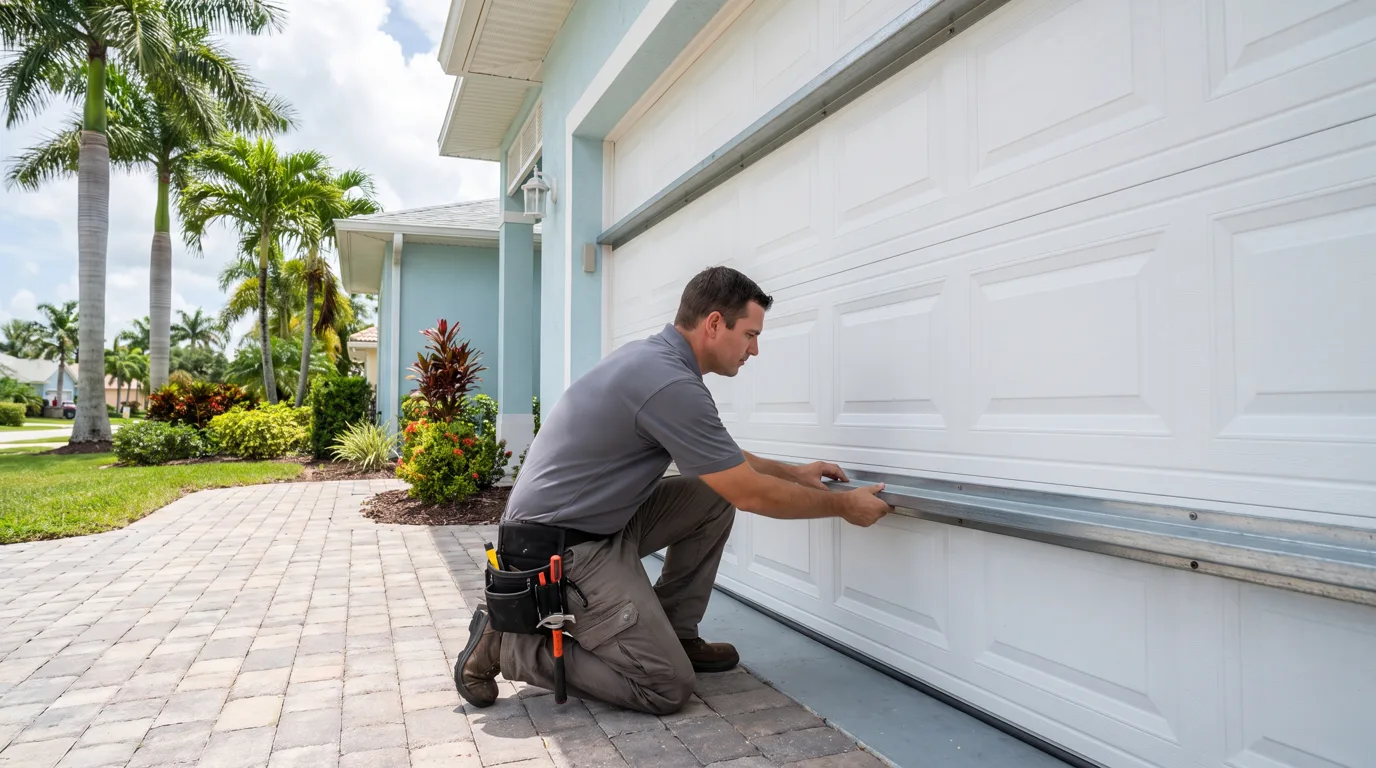
Garage Door Repair & Replacement in Miami, FL
Same-day service from vetted, local Miami garage door pros — springs, openers, off-track doors, and new installations, quoted upfront.
- Local Miami pros, vetted & insured
- Price approved by you before any work
- 24/7 emergency response
Request Service — Free Quote
A vetted local pro in Miami calls you back — usually within 15 minutes during business hours.
In Miami, a garage door is a code-regulated piece of hurricane protection, and everything about the trade here flows from that fact. Miami-Dade County sits in Florida’s High-Velocity Hurricane Zone (HVHZ) — the strictest wind-borne-debris code territory in the United States, written after Hurricane Andrew’s 1992 garage door failures showed the whole country what happens when the largest opening in a house blows in: the home pressurizes and the roof goes. Every garage door installed in Miami-Dade must carry a Notice of Acceptance (NOA) proving it passed large-missile impact and pressure-cycling tests, every installation requires a permit, and the paperwork directly affects your windstorm insurance premium.
Day to day, the enemy is slower: salt. Miami’s marine air corrodes springs, cables, hinges, and fasteners on a schedule northern doors never see — oceanside homes in Key Biscayne or Miami Beach can need spring replacement in half the national interval, and uncoated hardware anywhere east of US-1 ages visibly year by year. Add summer humidity, daily thunderstorm season, and the nation’s highest lightning strike density frying opener boards, and Miami doors earn constant attention between hurricanes.
The companies in our Miami network operate inside this system every day: they install NOA-listed impact doors, pull Miami-Dade permits as a matter of routine, document wind-rating compliance for insurance mitigation inspections, and stock the stainless and coated hardware that survives the salt. In a market with this much regulation — and this many unlicensed operators working around it — using a properly licensed local company is not optional.
Garage Door Services in Miami
Repair in Miami
A garage door that won’t open, won’t close, or makes grinding noises is more than an inconvenience — it’s a se…
Learn more →Spring Replacement in Miami
The spring does the real lifting — your opener just steers. When a spring snaps, the door becomes a 200-pound…
Learn more →Opener Repair in Miami
When the remote clicks and nothing happens, the problem may be a $15 sensor alignment or a worn-out motor — an…
Learn more →Installation in Miami
A new garage door is consistently ranked the single highest-ROI home improvement in Remodeling Magazine’s Cost…
Learn more →Commercial Repair in Miami
A failed overhead door doesn’t just block a bay — it stops trucks, idles crews, and leaves inventory exposed.…
Learn more →24/7 Emergency in Miami
A garage door stuck wide open at 11 PM is an open door to your home. A car trapped behind a dead door at 6 AM…
Learn more →Every Miami Pro Is Vetted Before They Reach Your Door
Insurance Verified
Active general liability coverage confirmed before joining our network — and rechecked periodically.
Licensed Where Required
State and city contractor licensing verified wherever the jurisdiction requires it.
Upfront Pricing Required
Every pro quotes the price on-site, in writing, before work begins. Bait-and-switch ends the partnership.
Track Record Reviewed
Years in business, review history, and complaint patterns checked under one consistent company name.
Garage Door Service Costs in Miami
Typical all-in price ranges (parts + labor) reported in the Miami area. Your exact quote depends on door size, parts, and access — the technician confirms the price before any work begins.
| Service | Typical Miami Range | Notes |
|---|---|---|
| Garage Door Repair | $160 – $475 | Corrosion-related cable/bracket work is a Miami staple |
| Garage Door Spring Replacement | $190 – $425 | Coated or stainless springs strongly recommended near the coast |
| Garage Door Opener Repair | $110 – $700 | Lightning-killed boards are constant; surge protection advised |
| Garage Door Installation | $2,400 – $8,500 | HVHZ impact-rated doors with NOA + permit; insurance savings offset the premium |
| Commercial Garage Door Repair | $300 – $1,600 | Parking gates, rolling shutters, and HVHZ commercial doors |
| 24 Hour Emergency Garage Door Repair | $225 – $700 | Pre-storm demand surges — do not wait for a hurricane watch to fix a failing door |
Want an exact number for your door?
Free quote over the phone in minutes — confirmed on-site before any work.
Garage Door Replacement & New Installation in Miami
When a door is past saving — rusted-through sections, repeated spring and cable failures, or panels that no longer exist as replacement parts — our Miami pros measure, quote, and install new doors, usually within one to two weeks. A new garage door installed in Miami typically runs $2,400–$8,500 depending on size, material, and insulation. The install price is quoted in writing before any work is scheduled, and the old door is hauled away as part of the job.
Not sure whether to fix or replace? Our guide to repair vs. replacement walks through the five factors that decide it, and the installation service page covers door styles, materials, and what's included in every install.
What Miami Weather Does to Garage Doors
Tropical marine: hurricane season June through November in the nation’s strictest wind-code territory, salt air that corrodes steel hardware year-round (fastest within a few miles of the ocean), 90% summer humidity, daily wet-season thunderstorms, and the highest lightning density in the United States taking a steady toll on opener electronics. No freezes — Miami doors never see cold-snap failures, but corrosion never sleeps either.
Salt is the spring killer: chloride-laden air pits coil steel and can halve spring life near the coast. Galvanized, powder-coated, or oil-tempered springs plus frequent lubrication are the local standard, and stainless cables and hinges pay for themselves east of US-1. Any spring job in Miami should include a corrosion check of cables and bottom brackets — they fail from the same exposure.
Miami Homes & Garages
Concrete-block single-story homes dominate — ranchers from the 1950s–70s in Westchester and Coral Way, newer CBS construction in Kendall and Doral — most with single or double attached garages. A large share of older homes still run pre-Andrew doors that predate impact codes; these are grandfathered until replaced, at which point an NOA-listed impact door and permit are mandatory. High-rise and townhome communities add a steady commercial market in parking garage gates and rolling shutters.
Permits & Local Rules
Strictest in the nation: garage door replacement in Miami-Dade requires a building permit and an HVHZ-compliant door with a Miami-Dade NOA (Notice of Acceptance) — no exceptions, and unpermitted work surfaces at sale time, can void windstorm coverage, and can be ordered removed. Installation and structural repair require a licensed contractor (verify at myfloridalicense.com). The upside: a documented impact-rated door counts in your windstorm mitigation inspection and meaningfully lowers insurance premiums. Coral Gables adds historic-district review in designated areas.
Miami Neighborhoods We Serve
- Coral Way
- Coconut Grove
- Westchester
- Flagami
- Little Havana
- Shenandoah
- Allapattah
- Silver Bluff
- West Flagler
- The Roads
Surrounding Communities
- Hialeah
- Kendall
- Coral Gables
- Doral
- Miami Beach
- Homestead
- Cutler Bay
- Palmetto Bay
Serving Miami-Dade County and surrounding areas.
Garage Door Questions from Miami Homeowners
Do I really need a permit to replace my garage door in Miami?
Yes — no exceptions in Miami-Dade. The county treats the garage door as hurricane protection: replacement requires a building permit and a door holding a Miami-Dade NOA proving it passed impact and pressure testing. Unpermitted door work is a real liability here — it surfaces in pre-sale inspections, can void windstorm insurance claims, and can be ordered corrected at your expense. Legitimate Miami installers pull the permit as part of the job; a quote that skips the permit is telling you everything.
What is an NOA and how do I know if my door has one?
A Notice of Acceptance is Miami-Dade’s product approval — documentation that a specific door model passed the county’s large-missile impact and pressure-cycling tests for HVHZ use. Doors installed since the late 1990s usually have a label on the inside face or end panel with the NOA number; the county’s product approval database is searchable online. If you’re buying a home, the door’s NOA and permit history matter for both insurance and your wind mitigation inspection.
My door is from before Hurricane Andrew. Am I required to replace it?
Not proactively — pre-code doors are grandfathered while they remain functional. But the moment you replace it, HVHZ rules apply in full: NOA-listed impact door, permit, licensed contractor. Two practical reasons not to wait for failure: an old non-impact door is genuinely the weakest point of your house in a hurricane, and a documented impact door lowers windstorm premiums enough that the upgrade partially pays for itself within several years.
Why does garage door hardware corrode so fast here?
Salt aerosol. Marine air carries chloride particles that settle on every steel surface and accelerate electrochemical corrosion — fastest within a couple of miles of the ocean, but measurable across the county. Springs pit and snap early, cables fray from the inside, and hinges seize. The Miami playbook: galvanized or stainless hardware on every replacement, a freshwater rinse of the door’s lower hardware every few months if you’re coastal, and lubrication on a schedule that would seem excessive anywhere else.
A hurricane watch was just issued. Can I get my door reinforced in time?
Realistically, no — and be wary of anyone selling miracle braces in the 48 hours before landfall. Once a watch is issued, every door company in the county is booked, parts are gone, and permits can’t be processed. The time to address a weak or failing door is during the off-season, when impact-door lead times are normal and installers can do the job right. What you can do pre-storm: ensure the door is fully closed and locked, and follow your door manufacturer’s bracing instructions only if the door was designed for them.
Helpful Reading for Miami Homeowners
Garage door trouble in Miami?
One free call. A vetted local pro. Usually fixed the same day.
Garage Door Service Near Miami
We also connect homeowners with local pros in these nearby areas:
Page last updated: 2026-06-12